
Gardening has a special way of bringing joy and beauty into our lives, especially when it comes to growing your own food. If you’ve been eyeing that small patch of yard or balcony and dreaming of a lush, productive vegetable garden, then you’re in the right place. Whether you’re a seasoned green thumb or a newbie with a few pots, you might be craving some fresh ideas to get your climbing plants up off the ground and into the sunlight.
If you love the idea of vertical gardening but feel overwhelmed by choices, this post is just for you. Here, I’ve gathered 7 bean trellis ideas that are not only practical but also enhance the look of your garden. These structures can transform your space into a charming green oasis while maximizing your growing area. You’ll find everything from classic wooden designs to creative DIY projects that fit any budget.
Get ready to explore trellis options that are beautiful, functional, and perfect for your vegetable garden design. Whether you’re looking for a quick weekend DIY or a more permanent fixture, each idea aims to help your beans thrive while adding a touch of flair to your small space. So, let’s dive into these inspiring bean trellis ideas!
Key Takeaways
– Explore classic wooden trellises for a timeless and sturdy option that suits any garden style.
– Discover the versatility of a DIY bamboo trellis, perfect for a budget-friendly yet effective support system.
– Consider a rustic metal trellis to add an industrial touch while supporting your climbing plants.
– Learn about the A-frame trellis design, which maximizes space and offers easy access to your veggies.
– Find out how a vertical planter trellis can be both a space-saving solution and an eye-catching garden feature.
1. Classic Wooden Trellis
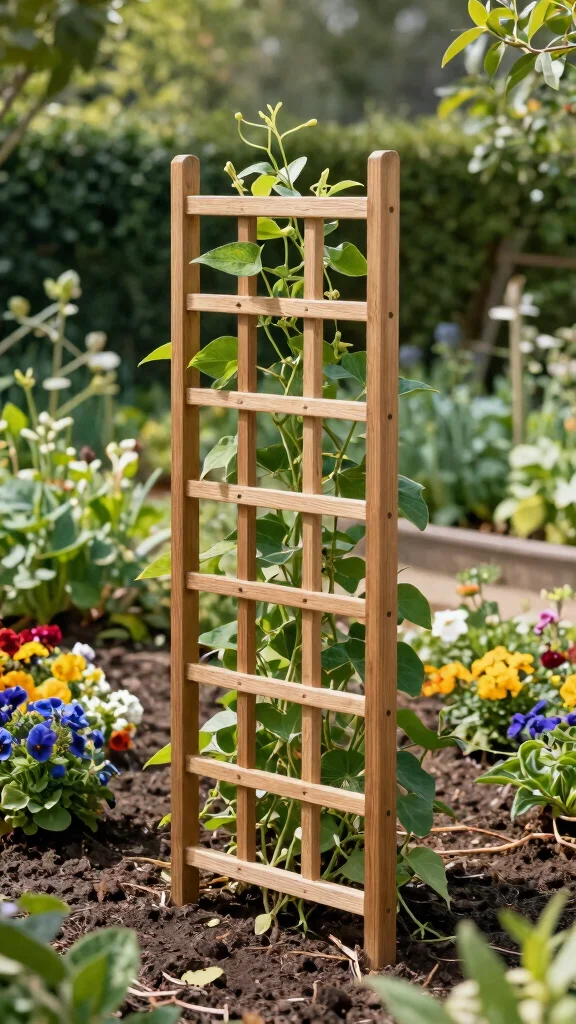
A classic wooden trellis brings timeless elegance to your garden. With its rustic charm, this structure beautifully complements any design while providing essential support for your climbing beans. Made from untreated wood, it ensures a natural look that adds warmth and character to your outdoor space.
To craft a wooden trellis, opt for durable materials like cedar or pine, which resist weathering. Assemble vertical and horizontal slats to create a grid that encourages your beans to climb freely. This design increases your growing area while serving as a stunning focal point in your vegetable garden.
Key steps to create a classic wooden trellis:
– Choose untreated cedar or pine for durability
– Construct a grid with vertical and horizontal slats
– Secure the trellis with stakes for stability
– Paint or stain to match your garden theme
This option not only maximizes space but also enhances the beauty of your garden, resulting in a lush, inviting atmosphere.
Fun fact: A classic wooden trellis made from cedar or pine can last 5–7 years with proper care, while a simple grid boosts bean yields and airflow by up to 20%. Build vertical and enjoy rustic charm and productive vines.
Key Trade-offs & Our Top Pick
Classic Wooden Trellis
– Pros:
– Timeless and attractive design that adds charm to your garden.
– Durable when treated properly, providing long-lasting support for climbing plants.
– Cons:
– Can be expensive compared to other materials.
– Requires regular maintenance, like sealing or painting, to prevent rot and weathering.
– Best for: Gardeners looking for a traditional aesthetic and willing to invest in upkeep.
DIY Bamboo Trellis
– Pros:
– Cost-effective option, as bamboo is often inexpensive or even free if sourced locally.
– Lightweight and easy to assemble, making it simple to relocate as needed.
– Cons:
– Limited durability, which may require replacement after a season or two.
– May not support heavier climbing plants as effectively as sturdier options.
– Best for: Budget-conscious gardeners who want a temporary solution for lighter plants.
Rustic Metal Trellis
– Pros:
– Extremely durable and often rust-resistant, providing a long-lasting structure.
– Adds an industrial look to your garden, fitting well with modern designs.
– Cons:
– Can be heavy and cumbersome to install, especially in hard soil.
– The cost can vary significantly based on design and size.
– Best for: Gardeners seeking a modern aesthetic who want a sturdy option for vigorous climbing plants.
A-Frame Trellis
– Pros:
– Offers two planting surfaces, maximizing vertical space in small gardens.
– Simple design, making it easy to build and use.
– Cons:
– Can take up a fair amount of ground space, limiting planting options below.
– May not be as visually appealing as other trellis styles.
– Best for: Urban gardeners needing to utilize vertical space effectively while growing multiple plant types.
Netting Trellis
– Pros:
– Versatile and adaptable to various spaces, as it can be hung or stretched between existing structures.
– Lightweight and easy to install, providing instant support for climbing plants.
– Cons:
– May not hold up against strong winds or heavy fruits, requiring careful selection of plants.
– Not as visually striking as solid trellis styles.
– Best for: Gardeners using unconventional spaces like fences or walls who want flexibility in their setup.
Archway Trellis
– Pros:
– Creates a stunning focal point in any garden while providing support for climbing plants.
– Can serve as an entrance or pathway, adding charm and character to your outdoor space.
– Cons:
– Requires more space, making it unsuitable for very small gardens.
– Installation can be complex and may need professional help.
– Best for: Gardeners looking to create a dramatic entrance or feature in their garden.
Vertical Planter Trellis
– Pros:
– Combines planting space with vertical support, ideal for small gardens.
– Often comes with built-in planters for easy organization of plants.
– Cons:
– Limited planting depth, which may affect the growth of larger plants.
– Can be costly compared to traditional trellises, especially for high-quality materials.
– Best for: Gardeners wanting to maximize productivity in small spaces while keeping plants organized.
Best Overall: Classic Wooden Trellis
The Classic Wooden Trellis stands out as our top pick for most gardeners. It offers great value for money due to its timeless aesthetic and durability. While it does require maintenance, its sturdiness and ability to support a variety of climbing plants make it an excellent long-term investment. You’ll appreciate how it enhances the beauty of your garden while ensuring your beans and other plants thrive.
Why We Picked This:
We chose the Classic Wooden Trellis for its balance of beauty, durability, and versatility. Yet, if you’re looking to save on costs or need a more temporary solution, the DIY Bamboo Trellis could be your go-to option. For those needing a bold statement, the Archway Trellis might be more appealing. Each option has its unique strengths, so consider what matters most for your garden.
2. DIY Bamboo Trellis
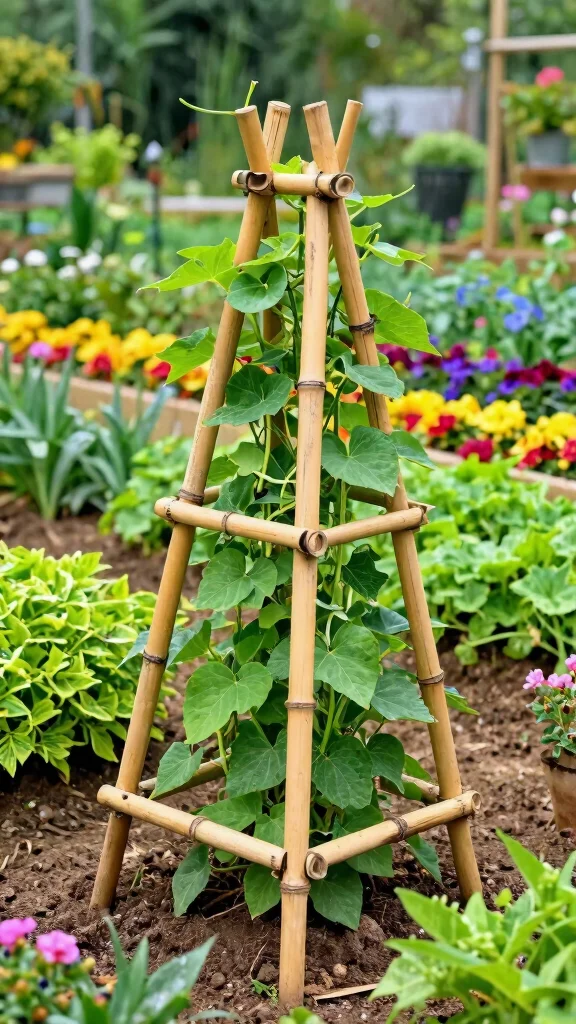
If you’re after an eco-friendly gardening solution, a DIY bamboo trellis is perfect for you! Bamboo is not only lightweight but also incredibly sturdy, making it an excellent support for your climbing bean plants. Its natural look adds a unique touch to your garden, enhancing its overall appeal.
To build your bamboo trellis, gather some strong bamboo stakes and arrange them in a triangular or square shape. Use natural twine or jute rope to connect them, giving a rustic feel. This trellis design is budget-friendly and easy to customize, allowing you to adjust heights based on your available space.
Steps to create a DIY bamboo trellis:
– Gather sturdy bamboo stakes for support
– Arrange them in a triangular or square formation
– Connect with twine for a rustic look
– Use it in container gardens or along fences
This flexible design not only supports your beans but also allows for creative layouts, making your garden both functional and beautiful.
DIY Bamboo Trellis
Editor’s Choice

Vivifying Jute Twine, 328 Feet 3mm Strong Natural Garden Twine for Climb…


Plant Stakes,4FT Longer Sturdy Natural Bamboo Garden Stakes,GAGINANG 25P…
3. Rustic Metal Trellis

For a modern twist, consider incorporating a rustic metal trellis into your garden design. Trellises made from steel or wrought iron offer a sleek look while providing strong support for even the most vigorous bean varieties. Their sturdy construction ensures they won’t bend under pressure, making them a reliable choice.
You can find pre-made metal trellises in various styles, such as arches or geometric shapes. These not only support your climbing plants but also serve as stunning garden art, enhancing the visual interest of your space. Opt for weathered finishes that blend seamlessly with natural surroundings for added charm.
Features of a rustic metal trellis:
– Choose steel or wrought iron for durability
– Select from various designs like arches or geometric shapes
– Look for weathered finishes for a rustic touch
– Pair with trailing flowers for contrast
This design creates an eye-catching centerpiece in your garden, showcasing the lush green beans beautifully against the striking metal backdrop.
Fun Fact: a sturdy metal trellis can support tall bean vines up to 6 feet, even in windy spaces. Arches and geometric designs guide growth, cutting bending and spillover—making your bean trellis ideas both practical and pretty.
Rustic Metal Trellis
Editor’s Choice
Spiral Frame Trellis for Climbing Plants Outdoor -72″ Tall Heavy Duty Me…
2 Pack Garden Obelisk Trellis for Climbing Plants, 71″ Metal Rustproof P…
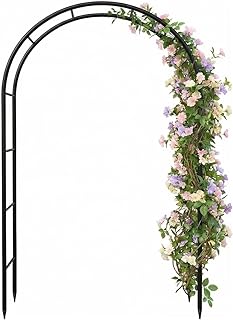
Galvanized Metal Garden Arbor,7.6ft H x 4.6ft W,Rust-Resistant Heavy-Dut…
4. A-Frame Trellis
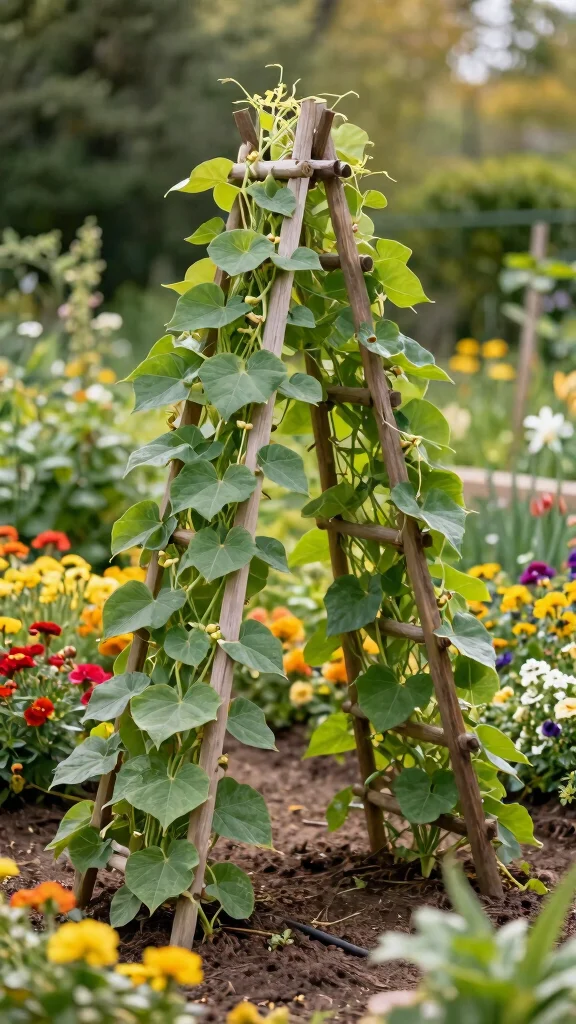
Searching for a space-saving trellis solution? An A-frame trellis is exactly what you need! This clever design allows bean plants to grow vertically without occupying too much ground area, making it ideal for smaller gardens. Its structure encourages climbing from both sides, maximizing your harvest potential.
To build your A-frame trellis, use two tall stakes connected by shorter crossbars to form an ‘A’ shape. This design is not only functional but also versatile, allowing you to place it against a wall or fence, or even freestanding in your yard. Enhance its appeal by adding decorative elements like string lights or climbing flowers.
Steps to create an A-frame trellis:
– Use two tall stakes and connect with crossbars
– Position against a wall or freestanding
– Add a shelf for visual interest
– Decorate with lights or flowers for charm
This design not only saves space but also creates a delightful atmosphere, making it a lovely addition to any garden.
You might also like
A-Frame Trellis
Editor’s Choice

Bamboo Plant Stakes,HAINANSTRY Wood Plant Supports,Natural Bamboo Sticks…

PerkHomy Natural Jute Twine 600 Feet Long Twine String for Crafts Gift W…
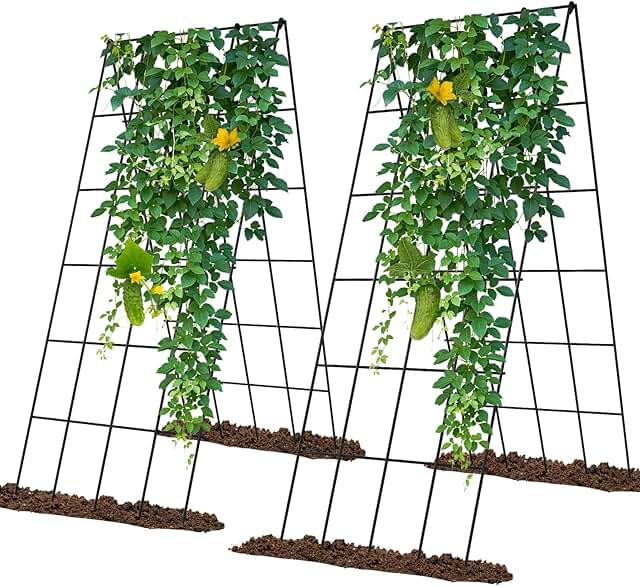
Cucumber Trellis 2 Pack, Foldable A-Frame Garden Trellis for Raised Bed …
5. Netting Trellis

For an effective and budget-friendly solution, a netting trellis is a fantastic option! This simple design allows climbing beans to weave through the net, creating a beautiful display as they grow while promoting healthy air circulation. It’s perfect for gardeners with limited space.
To set up a netting trellis, attach garden netting to a frame made from stakes or even a wall. This customizable method allows you to adjust height and width to fit your garden’s unique layout. Beans will naturally cling to the net, encouraging upward growth while keeping the area tidy.
Steps to implement a netting trellis:
– Attach garden netting to a sturdy frame
– Customize height and width for your space
– Choose recycled materials for an eco-friendly option
– Add colorful companion flowers at the base
This approach combines practicality with beauty, as the netting showcases your climbing plants while being easy to maintain.
📹 Related Video: Using Horticultural Netting (aka Crop Netting) to Trellis Pole Beans
Netting Trellis
Editor’s Choice

NHZ 16” Ground Rebar Stakes (8pcs) Heavy Duty J Hook Ground Anchors, C…

2 Pack 50″ Tall A Frame Trellis for Climbing Plants Outdoor (50″ X 17″) …

Feitore Deer Fence Netting, 7 x 100 Feet Anti Bird Deer Protection Net R…
6. Archway Trellis
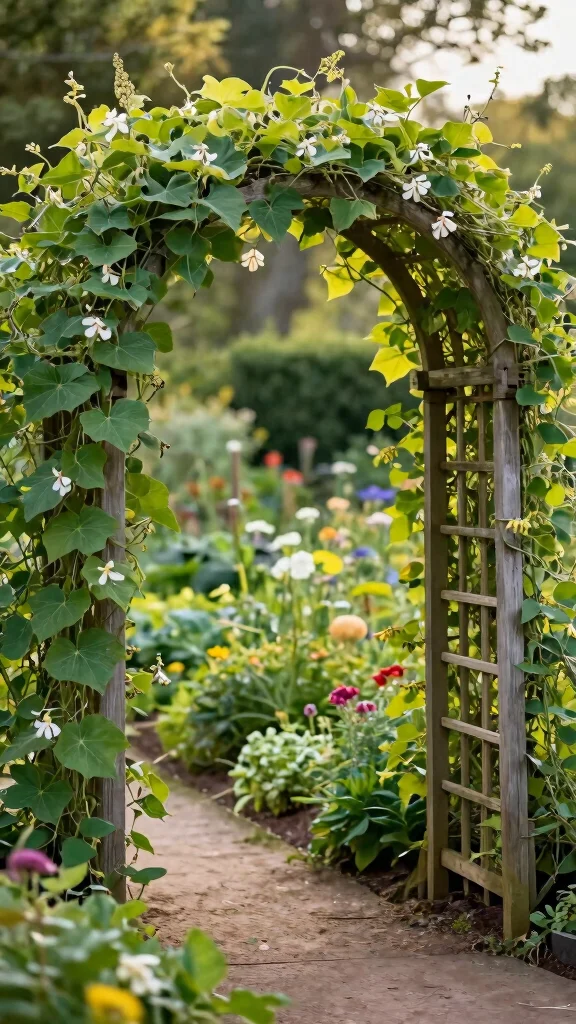
An archway trellis can turn your garden into a stunning vertical paradise for your bean plants! This architectural feature not only supports your climbing beans but also creates a picturesque passageway filled with lush greenery. It’s a charming way to elevate your outdoor space.
Typically made from strong materials like metal or wood, archway trellises provide a solid structure for your beans to climb. As they grow, they will cover the arch with vibrant foliage, creating a lovely shaded walkway. Position it at your garden’s entrance or as an eye-catching focal point within.
Highlights of an archway trellis:
– Choose sturdy materials like wood or metal
– Create a shaded walkway with climbing beans
– Position it as an entrance or focal point
– Decorate with lights or flowers for added charm
This design not only enhances your garden’s beauty but also offers a relaxing spot to enjoy nature, making it a delightful feature for gatherings.
You Might Also Like
Archway Trellis
Editor’s Choice
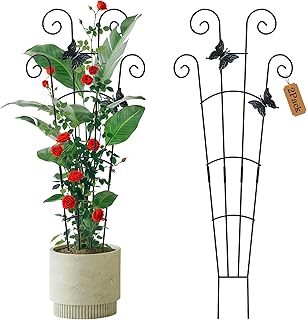
2 Pack 30 Inch Taller Plant Trellis for Potted Climbing Plants Indoor,Ex…

Natural Bamboo Trellis, 4Feet,3Pack,Fan-Shaped Plant Support Trellis for…
7. Vertical Planter Trellis
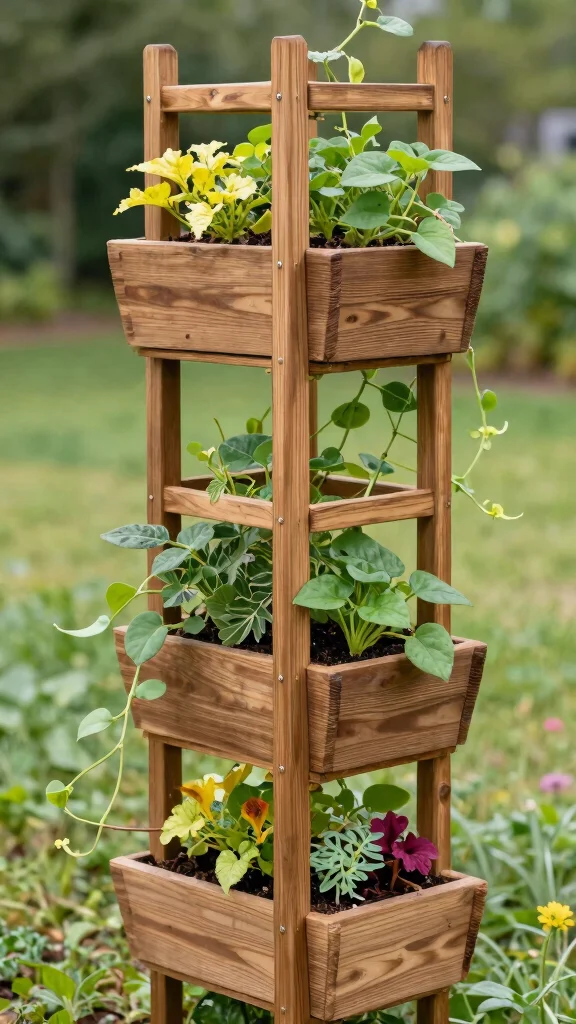
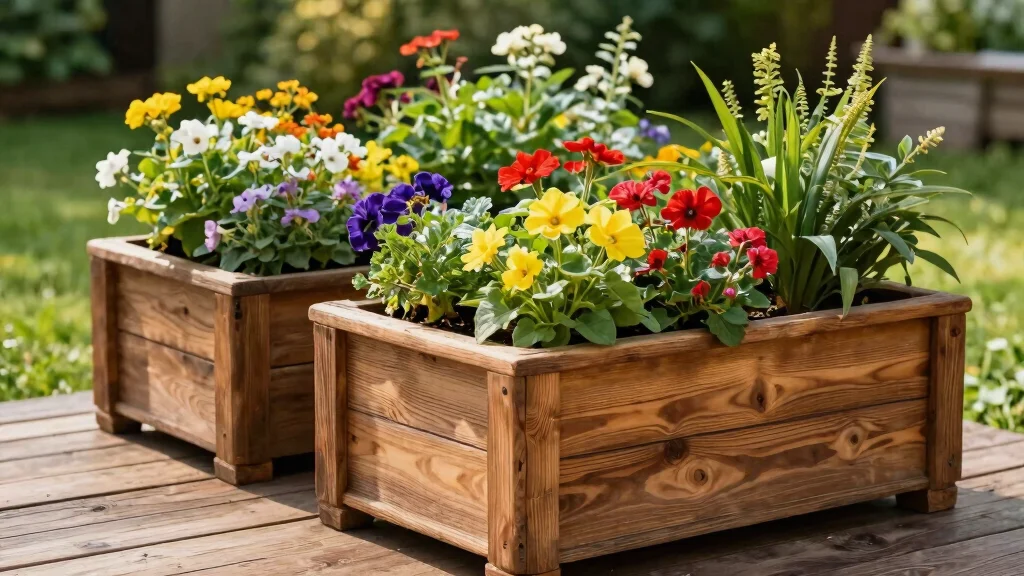
If space is at a premium, a vertical planter trellis is your best bet! This creative design allows you to grow beans vertically while incorporating planters into the structure, maximizing your growing area. It’s a smart solution for urban gardeners with limited ground space.
Construct a vertical planter trellis by combining planter boxes with a trellis wall, creating a multi-layered garden that enhances production. Using materials like wood or repurposed pallets not only gives it character but also promotes sustainability. Fill the planters with soil and companion plants to attract pollinators and elevate aesthetics.
Steps to build a vertical planter trellis:
– Combine planter boxes with a trellis wall
– Use wood or pallets for a charming look
– Fill with soil and companion plants for biodiversity
– Allow beans to grow upward for a lush appearance
This setup creates a beautiful, productive garden landscape, encouraging healthy growth through improved airflow and sunlight exposure.
Small-space gardeners know this: vertical planter trellises are one of the best bean trellis ideas. Beans climb higher, planters stack up, and your balcony becomes a thriving mini-farm.
Vertical Planter Trellis
Editor’s Choice
2 Pack 30 Inch Taller Plant Trellis for Potted Climbing Plants Indoor,Ex…

12 Pcs Garden DIY Mini Climbing Trellis Plastic Superimposed Potted Plan…

2 Pack Tomato Planter with Trellis 43 Inch, Self Watering Planter Box wi…
Conclusion
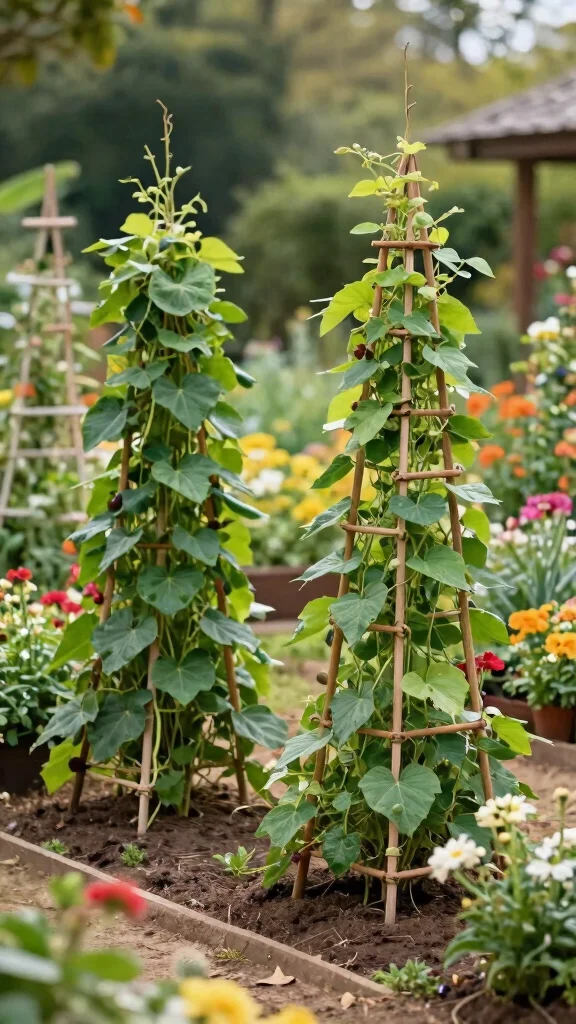
Vertical gardening with bean trellises opens up a world of possibilities for transforming your garden into a beautiful, productive space. Each of these seven ideas provides a unique way to support your climbing plants while adding charm and character.
Experimenting with different trellis styles allows you to personalize your garden and maximize space efficiently. So, whether you prefer a rustic wooden look, a chic metal design, or a creative DIY project, let your bean plants thrive skyward.
Now, gather your materials and get started on your vertical gardening journey for a bountiful harvest that will not only satisfy your taste buds but also delight the eyes!
Note: We aim to provide accurate product links, but some may occasionally expire or become unavailable. If this happens, please search directly on Amazon for the product or a suitable alternative.
This post contains Amazon affiliate links, meaning we may earn a small commission if you purchase through our links, at no extra cost to you.
Frequently Asked Questions
What are some practical bean trellis ideas for a small-space garden?
Here are practical bean trellis ideas for a small-space garden: a simple string and stake trellis, a freestanding cattle-panel wall, a teepee or tripod made from bamboo, a wall-mounted wire mesh, or a repurposed pallet lattice. Each option helps beans climb, keeps fruit off the ground, and fits tight spaces.
For bean trellis ideas that work in real gardens, think about how your space, sunlight, and airflow influence vertical gardening. Pair these garden trellises with a sense of style to keep your vegetable garden design cohesive and attractive.
Tip: start with one easy setup and scale up with DIY garden projects as you gain confidence in vertical gardening.
How do I choose the right trellis for my beans and space?
Start by matching the trellis to your bean type: pole beans need tall, sturdy supports while bush beans work on shorter options. Measure your available space, consider height, weight, and how you’ll access the beans for watering and harvesting.
Choose freestanding options if you can’t attach to a wall, or a wall-mounted or fence-tied trellis if you want a seamless look. Materials matter: wood for a natural look, galvanized metal for durability, or wire panels for a lightweight setup. Align your choice with vegetable garden design and vertical gardening goals to keep everything cohesive.
Can you share beginner-friendly DIY bean trellis ideas I can build this weekend?
Absolutely! Here are beginner-friendly DIY bean trellis ideas you can whip up quickly: 1) a simple string and stake trellis using two sturdy stakes and cotton twine; 2) a repurposed pallet trellis by removing the back slats and leaning it against a wall; 3) a teepee trellis from four bamboo poles tied at the top. Each setup trains beans upward and saves space in a small garden.
Quick steps: gather supplies, mark layout, assemble, secure, and test with light bean vines. As you grow more confident, you can upgrade to a fixed frame or add extra supports as part of your DIY garden projects.
Which climbing plants pair well with beans on a trellis?
Beans are fantastic partners for other climbers in vertical gardening. Pair them with peas for a staggered harvest, cucumber vines for a dense screen, or trailing nasturtiums to attract pollinators and repel aphids.
Think about spacing and light so all climbers have room to thrive. This approach fits well with vertical gardening and garden trellises while keeping your vegetable garden design efficient and beautiful.
How can I maintain and harvest from a bean trellis to keep it productive?
Maintenance is simple: secure the trellis firmly, train new growth along supports with soft ties, and prune any excess vine to improve air flow. Water at the base, mulch to conserve moisture, and inspect for pests weekly. Harvest beans regularly to encourage more production and avoid overripe pods that slow vines. With steady care, your bean trellis ideas translate into a thriving vertical garden and a neat, productive garden trellises display in your space.
Related Topics
bean trellis ideas
vertical gardening
climbing plants
garden trellises
small space gardening
DIY garden projects
vegetable garden design
easy gardening
productive gardens
sustainable gardening
beginner friendly
seasonal planting