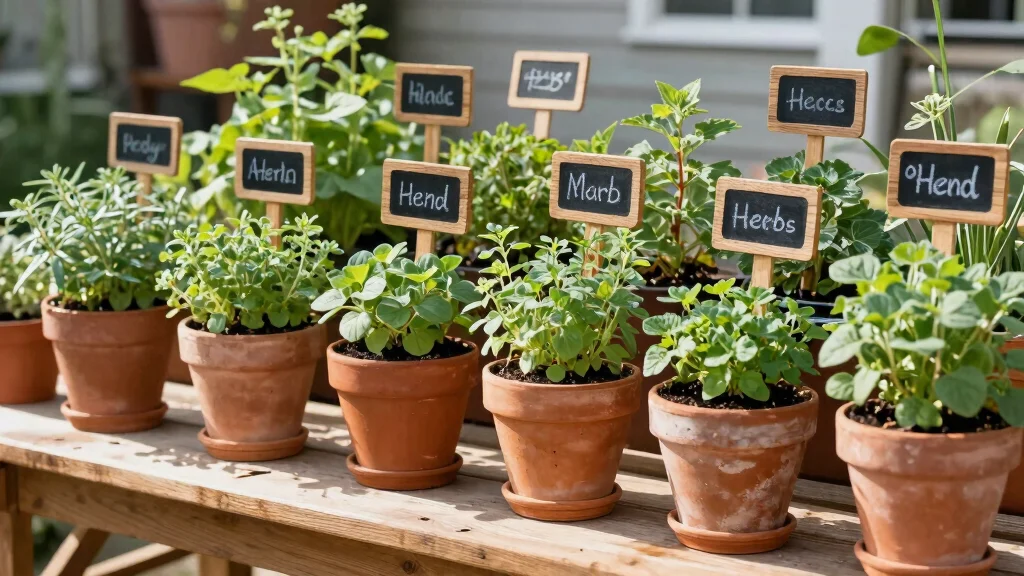
Organizing a garden can feel like a daunting task, especially when you have a variety of herbs sprouting all over. If you’ve ever found yourself confused between your basil and your cilantro, you’re not alone! This post is all about creating charming and functional herb labels that will bring order to your garden while adding a touch of personality. My motivation for crafting this guide stems from the joy I find in gardening, mixed with the little frustrations of keeping everything in its rightful place.
This article is perfect for urban gardeners who love to grow their own herbs but may struggle with garden organization. If you care about making your space beautiful and functional, you’ll find great ideas here. I’ve compiled a list of ten creative herb label ideas that are not only eco-friendly but also easy to make. These suggestions are delightful, practical, and will help you identify your plants in style, turning your garden into a charming oasis.
Let’s dive into these herb label ideas that will not only help you keep your garden organized but will also serve as a creative outlet for your DIY skills!
Key Takeaways
– Rustic Wooden Stake Labels: Simple and charming, wooden stakes can be easily crafted or purchased to add a natural feel to your garden.
– Chic Chalkboard Labels: Use chalkboard paint on small boards for a reusable and stylish way to identify your herbs.
– Stone Markers: Gather smooth stones and paint or etch herb names for a durable and natural look.
– Recycled Spoon Labels: Transform old spoons into unique plant markers by writing herb names on the handles.
– Printable Labels: For a modern touch, create and print labels that can be attached to pots or stakes, making identification clear and easy.
1. Rustic Wooden Stake Labels
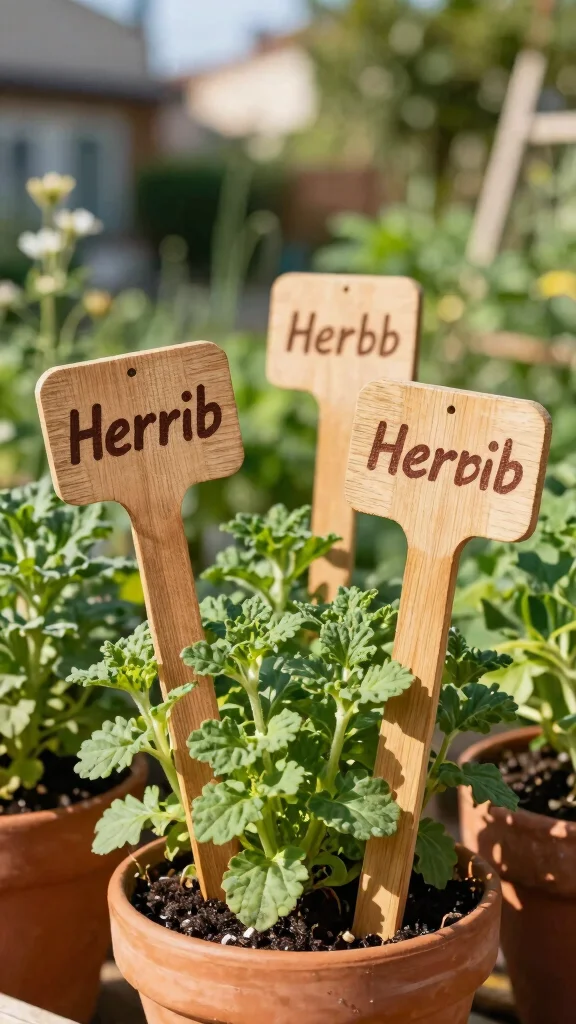
Transform simple wooden stakes into delightful herb labels that exude a rustic charm. By using untreated wood, you can cut the stakes to your preferred height and sand them for a smooth finish. Personalize each stake by painting or writing your herb names with non-toxic paint or permanent markers, and for an extra touch, distress the edges after painting for that vintage look.
Start by sealing the wood to protect against moisture. Mix different wood types for an appealing display. You could even add tiny twine bows for a personal flair.
Key steps to enhance your rustic labels:
– Seal wood to guard against moisture damage
– Experiment with various wood types for visual interest
– Add twine bows for a personal touch
These rustic stakes effortlessly enhance any urban garden, infusing it with handmade elegance and character.
Rustic Wooden Stake Labels
Editor’s Choice
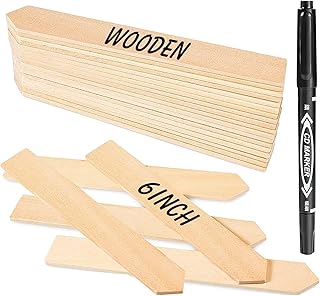
Zkptops 50Pcs Wooden Plant Labels Plant Tags 6 Inch Garden Plants Marker…


Amazon Basics Fine Tip Permanent Markers for Writing, Drawing, Quick Dry…

Rust-Oleum 1993502 Painter’s Touch Ultra Cover Multi-Purpose Brush-On Pa…
2. Chic Chalkboard Labels
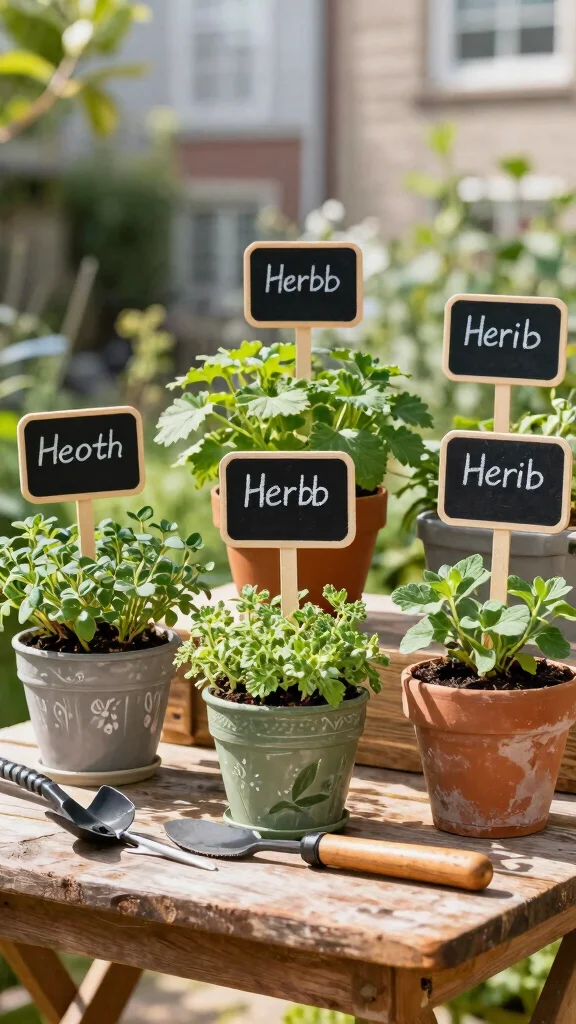
Chalkboard labels offer a stylish and flexible way to identify your herbs. You can easily find small chalkboard tags at craft stores or create your own by applying chalkboard paint to wooden boards. Use chalk or chalk markers to write the names of your herbs in fun, whimsical fonts, adding a unique personality to your garden.
Updating your labels is a breeze—just erase and rewrite whenever you change herb varieties. Customize colors and fonts to match your garden theme, all while being environmentally friendly with natural materials.
Advantages of using chalkboard labels:
– Easily update with a simple erase and rewrite
– Customize colors and fonts for a personal touch
– Eco-friendly, made from natural materials
These labels can enhance both pots and garden stakes, creating a visually appealing and organized space.
Chic Chalkboard Labels
Editor’s Choice
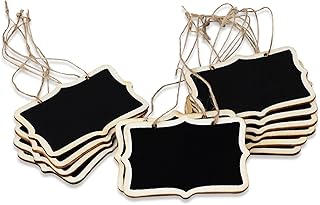
12-Pack Mini Hanging Wooden Chalkboard Labels – Small Reusable Blackbo…
Rust-Oleum 206540 Chalkboard Brush-On Paint, 30 oz, Black

Bandle B. Chalk Markers – 8 Vibrant, Erasable, Non-Toxic, Water-Based, R…
3. Stone Markers for a Natural Look
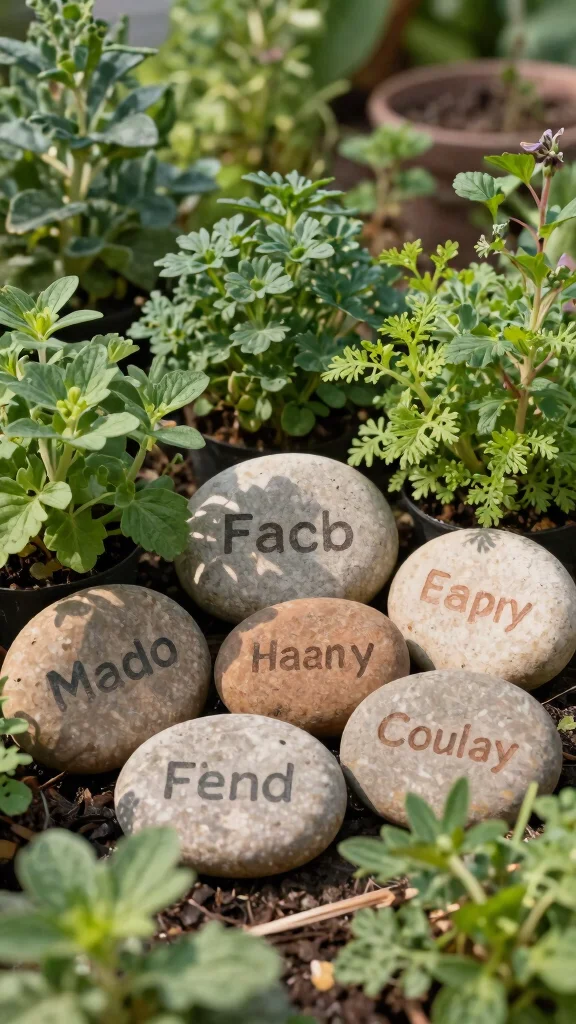
For an earthy vibe, consider smooth stones as herb markers. You can collect stones locally or purchase polished ones from a craft store. Label each stone with your herb names using paint or a permanent marker to create a natural look that harmonizes with your garden environment.
Choose stones large enough for clear writing but not too big to overshadow your plants. Use outdoor paint for durability against the elements, and arrange them artistically around your plants for a cohesive aesthetic.
Pro tips for stone markers:
– Select stones that are easy to write on
– Use outdoor paint for longevity
– Arrange stones creatively for a natural feel
These stone markers add a grounded touch to your urban garden, perfect for lovers of a natural aesthetic.
Fun fact: Stone markers can outlive plastic tags and keep your herb labels legible for seasons. Collect stones or buy polished ones, label with outdoor paint, and arrange them around herbs for a cohesive, natural look.
Stone Markers for a Natural Look
Editor’s Choice

Shuttle Art 25 Colors Outdoor Acrylic Paint Set, 2oz/60ml Waterproof Acr…

2 Pack Garden Marker Pen Permanent Markers Black (UV Fade Resistant Mark…

12PCS DIY Rocks for Engraved Inspirational Polished Garden Stones, Natur…
4. Recycled Spoon Labels
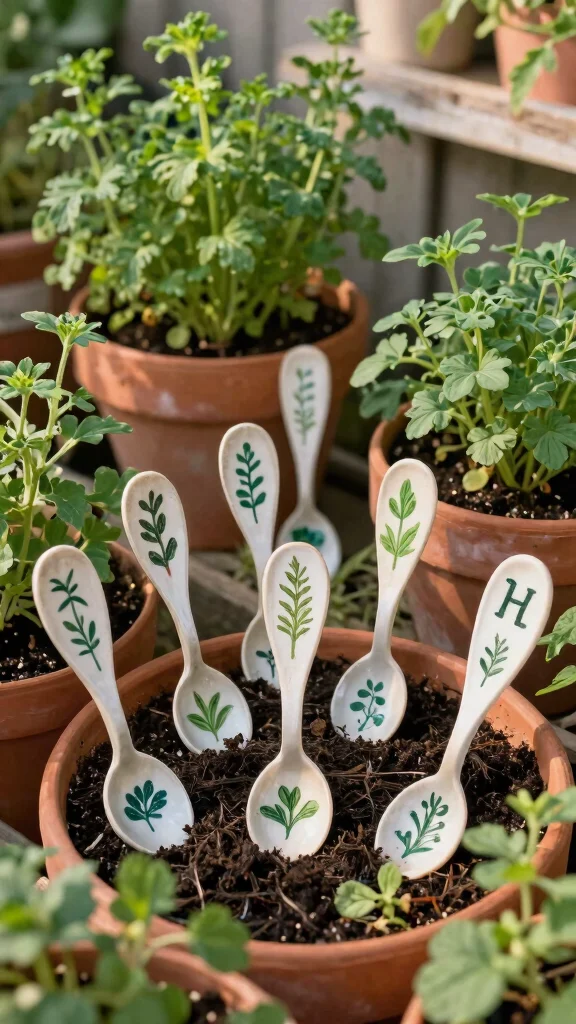
Breathe new life into old spoons by turning them into distinctive herb labels! Bend the spoon handles into the soil, using the bowl as a canvas for your herb names. Paint them with weather-resistant paint or use permanent markers for a striking finish.
Spoons are durable and can withstand various weather conditions. This upcycling effort promotes sustainability by reducing waste while adding a charming, vintage touch to your garden.
Benefits of using spoons:
– Durable for all weather conditions
– Upcycling reduces waste
– Vintage look enhances garden charm
Surround your herbs with these spoon labels for a whimsical fairy-tale atmosphere in your urban garden.
Recycled Spoon Labels
Editor’s Choice

2 Packs Garden Marker Friendship Gift, Metal Silver Spoon Plant Markers,…
![STAEDTLER GARDEN MARKER PEN PERMANENT OUTDOOR MARKER - [Pack of 2]](https://m.media-amazon.com/images/I/61KMOO2ccyL._AC_UL320_.jpg)
STAEDTLER GARDEN MARKER PEN PERMANENT OUTDOOR MARKER – [Pack of 2]
Shuttle Art 25 Colors Outdoor Acrylic Paint Set, 2oz/60ml Waterproof Acr…
5. DIY Fabric Tags

Fabric tags bring a soft, charming touch to your herb garden. Use pieces of fabric like burlap or cotton, cutting them into flag shapes, and attach them to wooden stakes. Write your herb names with fabric markers or paint to create a cozy, rustic feel.
Choose weather-resistant fabrics to ensure longevity. You can use various patterns to represent different herb categories and tie the tags with twine or natural string for that rustic finish.
Crafting tips for fabric tags:
– Select weather-resistant fabrics for durability
– Use different patterns for herb categories
– Tie tags with twine for a rustic look
These fabric tags flutter in the breeze, adding organization and charm to your garden.
You might also like


DIY Fabric Tags
Editor’s Choice

PerkHomy Natural Jute Twine 600 Feet Long Twine String for Crafts Gift W…

Hula Home Stained Glass Mandala Art Kit – DIY Window Clings with Markers…

G Gradual Women’s Fleece Lined Winter Leggings with Pockets Water Resist…
6. Terracotta Pot Labeling
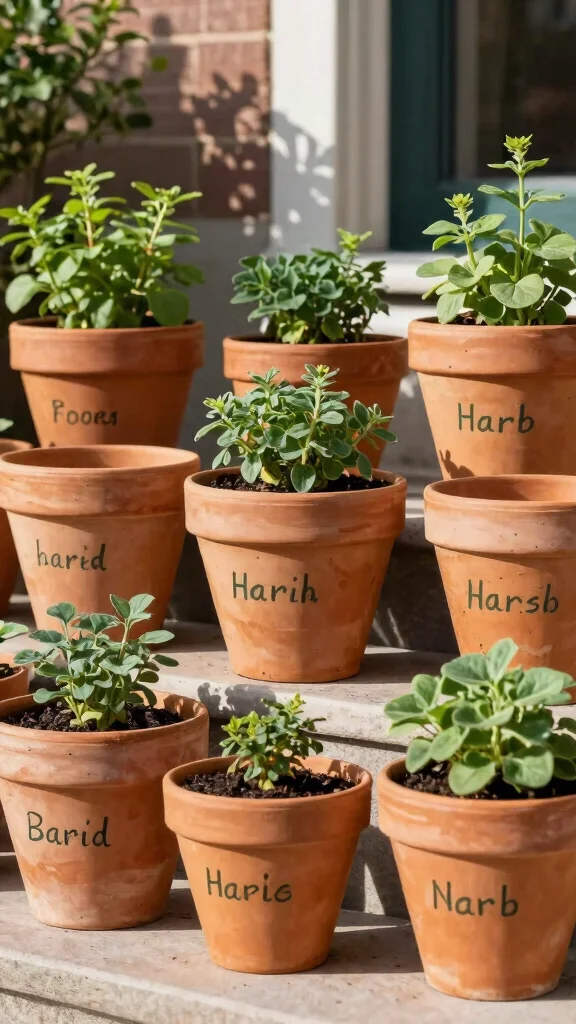
For a sleek and cohesive appearance, label directly on your terracotta pots. A paint pen or specialized pot paint allows you to write the names of your herbs, creating a clean and organized look that suits any urban garden.
Using pot labels saves space while looking chic and is easy to read and maintain. This method creates a polished and uniform appearance throughout your garden.
Advantages of pot labeling:
– Saves space while enhancing style
– Easy to maintain and read
– Creates a polished, uniform look
Consider planting themed herbs in labeled pots to elevate your garden’s visual appeal!
📹 Related Video: How to Label Your Garden, Planters & Containers | Terra Cotta / Ceramic Labels | Reusable & Durable!
Terracotta Pot Labeling
Editor’s Choice

Artline Garden Marker | Water Resistant | Quick Dry Ink Great For Outsid…

Tempil Temperature-Indicating Paint, 750⁰F (2-oz Jar)

Crescent Garden Brunello Classic Rolled Rim Planter Pot, Indoor/Outdoor …
7. Plant Marker Stones
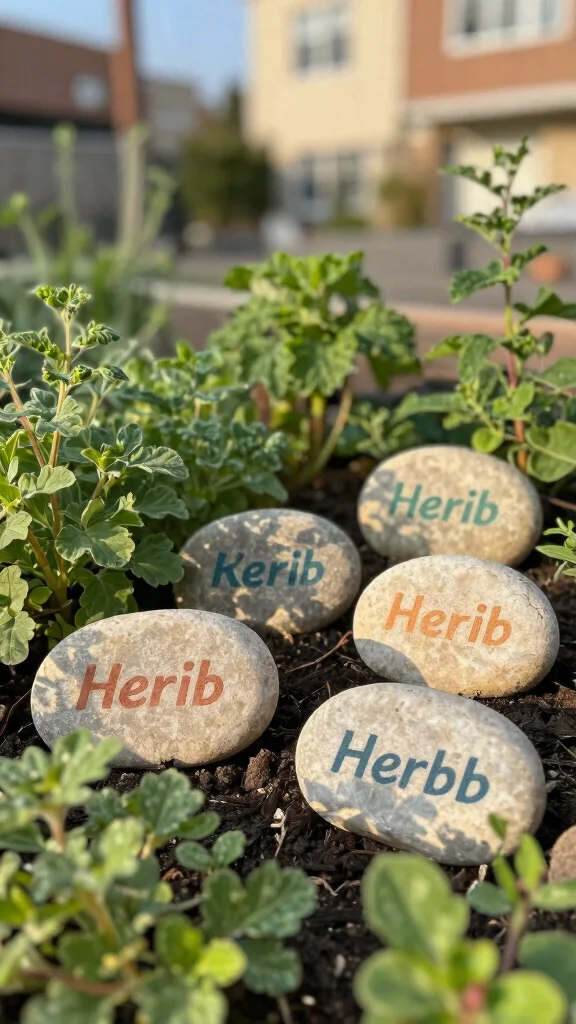
Plant marker stones provide an eco-friendly option for herb labeling that can be quite decorative. Instead of standard markers, opt for flat stones to label your herbs. Paint the herb names directly onto the stones for a rustic look that blends beautifully with your garden’s natural elements.
Use stones of varying sizes for added visual interest, arrange them in clusters around your herbs for an organic feel, and choose earthy colors to maintain a natural aesthetic.
Creating a cozy outdoor vibe with stones:
– Use different sized stones for variety
– Cluster them around herbs for an organic look
– Choose earthy colors for a natural feel
The simplicity and charm of stone markers can complement any garden theme while providing practical herb identification.
❝Plant marker stones turn herb labels into garden treasures. Paint names directly on flat stones for a rustic, eco friendly touch that grows with your herbs.❞
Plant Marker Stones
Editor’s Choice

Wet Look Stone Sealer 1 Quart – Color Enhancer for Outdoor Pavers, Drive…
Zkptops 50Pcs Wooden Plant Labels Plant Tags 6 Inch Garden Plants Marker…
Artline Garden Marker | Water Resistant | Quick Dry Ink Great For Outsid…
8. Printable Labels for a Modern Touch
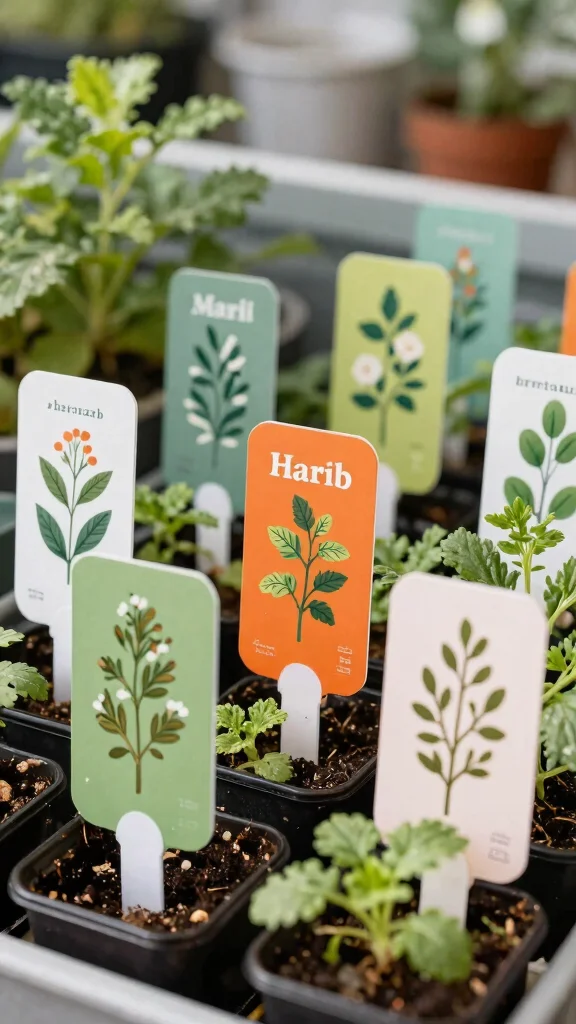
For the tech-savvy gardener, printable herb labels offer a modern and customizable solution. Design your labels online and print them on waterproof sticker paper. This method allows for creative fonts and colors, easily matching your garden’s aesthetic.
Create your labels using software like Canva, print them on waterproof paper for durability, and cut them out for easy application on pots or garden stakes.
Steps to create printable labels:
– Use design software for customization
– Print on waterproof paper for longevity
– Cut and stick onto pots or stakes
Printable labels can elevate your urban garden while ensuring practical herb identification.
You Might Also Like
Key Trade-offs & Our Top Pick
1. Rustic Wooden Stake Labels
– Pros:
– Eco-friendly and biodegradable, adding charm to your garden.
– Easy to customize with a wood burner or paint.
– Cons:
– May rot over time, especially in wet conditions.
– Requires some DIY skills for best results.
– Best for:
– Gardeners looking for a natural, traditional look.
2. Chic Chalkboard Labels
– Pros:
– Reusable and easy to update with chalk.
– Adds a stylish touch to your garden.
– Cons:
– Chalk can fade in rain or sun.
– Requires periodic rewriting as it wears off.
– Best for:
– Those who like to frequently change what they grow.
3. Stone Markers for a Natural Look
– Pros:
– Durable and resistant to weather conditions.
– Blend seamlessly with organic garden aesthetics.
– Cons:
– Heavier and can be more expensive than other options.
– Limited space for writing, depending on stone size.
– Best for:
– Gardeners wanting a permanent, rustic solution.
4. Recycled Spoon Labels
– Pros:
– Unique and quirky way to repurpose materials.
– Easy to write on and customize.
– Cons:
– May not hold up well against harsh weather.
– Requires some crafting effort.
– Best for:
– Creative gardeners looking to add personality to their space.
5. DIY Fabric Tags
– Pros:
– Soft and visually appealing, easy to sew or tie.
– Can be made from recycled fabric, promoting sustainability.
– Cons:
– May fade or deteriorate over time.
– Not as sturdy as other options.
– Best for:
– Gardeners who enjoy sewing and crafting.
Expert Recommendation:
Best Overall: Chic Chalkboard Labels
Chic chalkboard labels are our top pick because of their combination of style and functionality. ✔ They are reusable, allowing you to change plant names as needed without spending extra money. 💡 Their aesthetic appeal makes them perfect for urban gardens where space is limited and a touch of charm is desired. With minimal crafting skills, you can create a versatile labeling system that lasts.
Why We Picked This:
While chalkboard labels are our favorite, others might prefer rustic wooden stakes for their natural look or stone markers for durability. If you’re someone who loves to craft, recycled spoon labels or DIY fabric tags can also be excellent choices. Each label type has its unique pros and cons, so consider your gardening style and environment when making your decision. 🌱
Printable Labels for a Modern Touch
Editor’s Choice

SUPVAN T50M Pro Bluetooth Label Maker Machine with Tape, Wide Waterproof…

Premium Printable Vinyl Sticker Paper for Inkjet Printer – 30 Sheets Glo…

Whaline 12Pcs Herb Plant Label Signs 12 Styles Garden Herb Markers Thick…
9. Aesthetic Glass Jar Labels

Get crafty by upcycling old glass jars into herb markers! These jars can function as both containers and labels. Fill them with soil to plant your herbs or use them as decorative markers by writing herb names on the jar’s exterior with a permanent marker.
Enhance your jars by painting the lids for a bright splash of color, tying twine around the neck for a rustic touch, and using varied jar sizes for visual interest in your garden.
Decorating ideas for jar labels:
– Paint lids for a pop of color
– Tie twine for added rustic charm
– Use various jar sizes for visual variety
This creative approach not only adds charm but also keeps your herbs beautifully organized.
Aesthetic Glass Jar Labels
Editor’s Choice

COOLJOB 2 Pairs Gardening Gloves for Women Ladies, Breathable Rubber Coa…

Indoor Herb Garden Start Kit – Unique Gifts for Women, Mothers Day Gifts…

PerkHomy Natural Jute Twine 600 Feet Long Twine String for Crafts Gift W…
10. Herb Garden Signs for a Statement Look

Make a bold statement in your herb garden with larger signs placed among your plants. Create these from wood or recycled materials, painting them with your herb names and decorative designs. These signs can serve as focal points while clearly identifying your herbs.
Select vibrant colors to make your signs stand out, apply a protective finish for durability, and position them strategically at your garden’s entrance for maximum impact.
Creating eye-catching signs:
– Choose bright colors for visibility
– Use a protective finish for longevity
– Position signs at the garden’s entrance for impact
Well-designed signs not only assist in organization but also infuse personality and charm into your urban oasis.
❝Bold signs make your herb labels pop—use recycled wood, bright colors, and a clear finish for durability. Place them at your garden’s entrance to welcome visitors and clearly identify your herbs. Pro tip: seal with weatherproof paint to keep colors vibrant season after season.❞
Herb Garden Signs for a Statement Look
Editor’s Choice

Whaline 24Pcs Acrylic Plant Label Signs 12 Styles Garden Herb Markers Pl…

Minwax Fast Drying Polyurethane Spray, Protective Wood Finish, Clear Sem…

UPINS 24Pcs Acrylic Plant Labels Herb Plant Markers Plant Tags Signs wit…
Conclusion
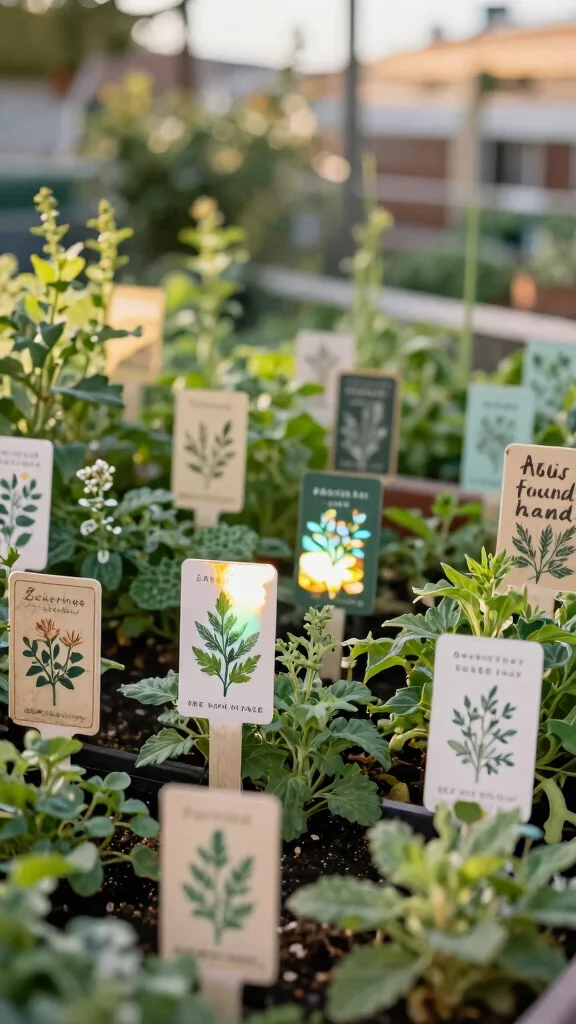
An organized herb garden is not just about functionality; it’s also about charm and personalization. With these ten DIY eco-friendly herb label ideas, you can create a beautiful, expressive garden that reflects your style while helping you keep track of your herbs.
Try out a few ideas that resonate with you and watch your urban garden transform into a delightful, organized sanctuary!
Note: We aim to provide accurate product links, but some may occasionally expire or become unavailable. If this happens, please search directly on Amazon for the product or a suitable alternative.
This post contains Amazon affiliate links, meaning we may earn a small commission if you purchase through our links, at no extra cost to you.
Frequently Asked Questions
What are the best eco-friendly materials for herb labels in an urban garden?
For eco-friendly herb labels, choose weather-ready materials that fit an urban garden. Options like bamboo stakes, cork, slate stones, or upcycled bottle caps work well and stay charming. Use a waterproof marker or a pencil you can relabel, and seal with a clear coating if needed to weather sun and rain. They’re perfect for DIY garden labels and help with garden organization and herb identification. Keep spare blanks on hand to rotate as herbs change, and link each label to a simple map of your planter beds to reinforce garden organization.
How can I quickly identify herbs in a small balcony garden without mixing them up?
Color-coded plant markers are a fast fix for herb identification in tight spaces. Attach durable markers to the pot rim or stake, and label with the herb name and variety. Create a simple map or quick reference card for garden organization and keep it handy near the seating area. Use weatherproof ink and a clear font for easy recognition.
What are some easy, creative DIY herb label ideas that suit an eco-friendly gardener?
Here are a few quick, stylish options you can try: 1) Painted bamboo stakes with a weatherproof marker; 2) Slate labels on a small stake, written with chalk or pencil for easy erasing; 3) Upcycled bottle-cap markers attached to stakes and labeled with a permanent marker; 4) Reclaimed wooden chopsticks or popsicle sticks with a bold pen; 5) Seed packet or cork tag labels tied near the plant with string. Each idea keeps your garden organized and totally charming as DIY garden labels.
How should I maintain herb labels over time so they stay legible through seasons?
Use weatherproof ink or pencils suited for outdoor use, and seal with a clear protective coating if needed. Consider laminating flat labels or applying a light sealant to protect handwriting. Place labels where they’re not rubbed off by watering, and keep a master garden map or spare labels to swap in as herbs grow or change. Regular quick checks will keep herb identification accurate and your garden organization intact.
Do herb labels really help with garden organization and preventing herb mixups in urban plots?
Absolutely. Clear herb labels reduce guesswork, save time, and keep small urban plots tidy. Use a consistent labeling style and place labels near each plant or container to aid plant markers recognition. Group herbs by bed or container, maintain a simple master list, and update labels whenever you transplant or rename varieties. This approach strengthens garden organization and makes herb identification quick and reliable.
Related Topics
herb labels
DIY garden labels
urban gardening
garden organization
plant markers
eco-friendly gardening
herb identification
charming decor
beginner friendly
seasonal gardening
creative gardening
easy DIY projects